First Impressions: Your Business Is Already Making One. Is It the Right One?
Every business makes a first impression, whether it intends to or not.
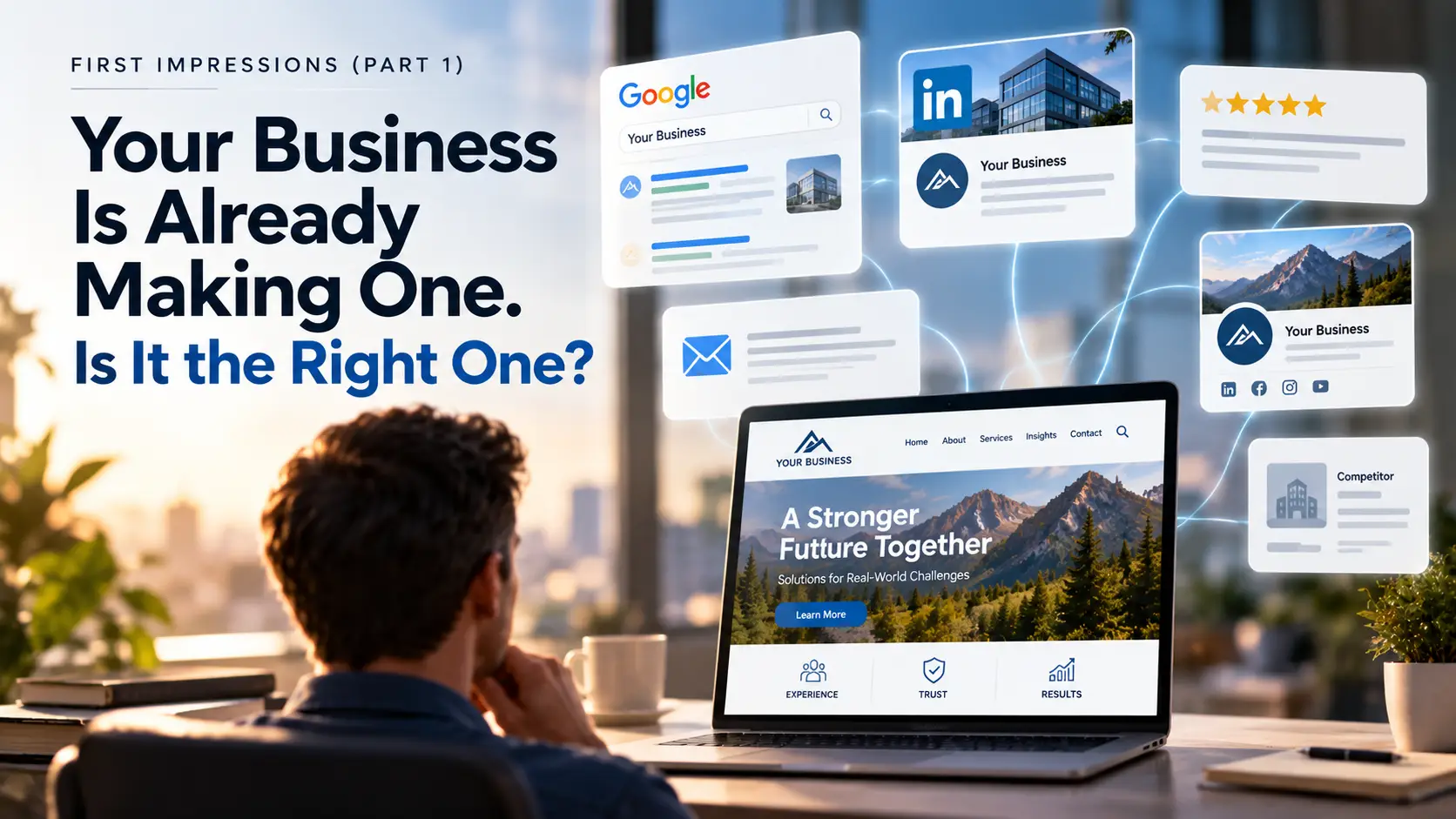
The interesting part is that, in many cases, people form that impression long before anyone actually speaks with you. A prospective customer may search for your company online, visit your website, look at your LinkedIn page, read your reviews, open one of your emails, or compare you with a competitor before you even know they are considering doing business with you.
By the time they pick up the phone, schedule a meeting, or submit a contact form, they may already have decided quite a bit about your company. They may have formed an opinion about how professional you are, how established you seem, whether you understand their needs, and whether they feel comfortable taking the next step.
That is why first impressions matter so much in business. Your company is always communicating something. The question is whether it is communicating what you want people to understand.
We Are Making a First Impression Too
This is an especially relevant topic for us at TrueBridge Creative because we are making our own first impression right now.
As we launch TrueBridge Creative, we are facing many of the same decisions we help other businesses work through. What do we want people to understand about us? What should our website communicate? How should our brand feel? What do we want someone to take away after spending only a few minutes with us online?
Going through that process ourselves has reinforced something we already believed: a first impression is rarely created by one thing.
It is not simply your logo. It is not simply your website. It is not your tagline, your color palette, or your LinkedIn profile. It is the combination of all of those things, along with the way you communicate, the experience you create, and the consistency with which you present yourself.
That is the idea behind our First Impressions series. Over the next several articles, we will explore the different ways businesses are perceived before a real conversation ever begins, and how those impressions can either build confidence or quietly create doubt.
Your First Impression May Happen Before You Know Someone Is Looking
Not long ago, the first real interaction with a business might have been a phone call, an office visit, or a meeting with a salesperson. Today, the process often begins much earlier.
A potential customer can research your organization from their desk or phone without you ever knowing. They can look at your website, compare your services to a competitor’s, search for your leadership team, read customer reviews, explore your social media presence, and try to understand what makes you different.
In a very short period of time, they may begin to form conclusions about your credibility, experience, professionalism, size, culture, and ability to solve their problem.
Some of those conclusions may be accurate. Others may not be.
That is part of the challenge.
A company can be exceptionally capable and still look dated online. It can provide outstanding service while having a website that is difficult to navigate. It can have an experienced leadership team but communicate its value in language that feels generic or unclear.
The people behind the organization may know how good the company really is, but prospective customers can only judge what they see.
Your public presence is often speaking for you before you have the opportunity to speak for yourself.
Your First Impression Is Much Bigger Than Your Logo
Branding is sometimes reduced to visual identity, but a brand is much broader than that. Your logo, colors, typography, and imagery certainly matter because they help create recognition and establish a visual personality. But those elements are only part of what people experience.
Consider what happens when someone visits a beautifully designed website but cannot figure out what the company actually does. Or when the website looks polished on a desktop computer but is frustrating to use on a phone. Maybe the branding looks modern, but the company’s LinkedIn page has not been updated in years. Perhaps the website is impressive, but the proposal sent afterward looks like it came from an entirely different company.
None of those things necessarily mean the business is bad. But together they can create uncertainty.
On the other hand, when the website, messaging, proposals, social presence, emails, and marketing materials all feel connected, something different happens. The organization begins to feel intentional. It feels established. It feels like the people behind it are paying attention.
That consistency helps create confidence.
People Do Not Spend as Much Time With Your Marketing as You Do
One of the easiest mistakes any business can make is assuming customers will study its website or marketing materials as carefully as the people who created them.
They usually will not.
Research from the Nielsen Norman Group has consistently shown that people tend to scan webpages rather than read every word, making clear headings, concise messaging, and intuitive organization especially important.
Most people scan first. They look for something that tells them they are in the right place. They want to quickly understand what you do, whether you can help them, and whether there is a reason to keep reading.
That does not mean every website needs to be overly simple or every message needs to be reduced to a slogan. It does mean that clarity matters.
If someone lands on your homepage and has to work to understand what your company does, that creates friction. If they cannot find the information they are looking for, that creates more friction. If they’re interested but cannot tell what to do next, you may lose an opportunity that was already moving in your direction.
Good branding and good design help remove that friction. They make it easier for someone to understand who you are, why you matter, and what they should do next.
First Impressions Are Really About Confidence
When we talk about branding, websites, messaging, or design, it is easy to focus on whether something looks good. Appearance certainly matters, but the deeper issue is confidence.
Stanford University’s research on website credibility reinforces this connection, identifying professional design, usability, and clear information about the organization as important factors in how visitors assess credibility.
A potential customer is often asking questions they may never say out loud.
Does this company look legitimate? Do they understand businesses like mine? Do they seem experienced? Do they pay attention to detail? Will they be easy to work with? Can I trust them to deliver what they promise?
Your public presence begins answering those questions before the customer ever asks them directly.
A strong website cannot prove that you will provide excellent service. A polished brand cannot guarantee that you will meet every deadline. Thoughtful messaging does not automatically make an organization trustworthy.
But all of those things can help create the confidence necessary for someone to keep moving forward.
That matters because customers rarely make decisions based on capability alone. They also make decisions based on how comfortable they feel choosing you.
Consistency Helps Build Trust
Think about what would happen if a person introduced themselves one way during your first meeting and behaved completely differently the next time you saw them. You might begin wondering which version was genuine.
Businesses can create the same kind of uncertainty when their public presence feels disconnected.
If your website communicates one message, your sales materials communicate another, and your social media presence feels like it belongs to a completely different organization, the customer has to work harder to understand who you are.
Consistency does not mean everything has to look exactly the same. It means everything should feel like it belongs together.
The same values should come through. The same personality should be recognizable. The same level of professionalism should be present. Your customer should encounter a clear, connected experience whether they are on your website, reading a proposal, looking at your LinkedIn page, or receiving an email from your team.
Over time, that consistency supports recognition. Recognition creates familiarity, and familiarity can help build trust.
Your Digital Presence Sets Expectations
There is another reason first impressions deserve attention: they begin setting expectations for what working with your organization might be like.
A clear, easy-to-use website may suggest that the company is organized and thoughtful. A well-written proposal can communicate attention to detail. Useful articles and insights can demonstrate expertise. Consistent branding can suggest discipline and professionalism.
These things don’t prove what the customer experience will ultimately be, but they shape what someone expects.
The reverse is also true.
An outdated website does not necessarily mean the company is outdated. Poorly designed marketing materials do not mean the organization provides poor service. An unclear message does not mean the people behind the company do not understand their business.
But prospective customers may not know that.
They do not have access to all of the internal knowledge, experience, history, and relationships that you do. They can only evaluate what is available to them.
That is why your public presence should do its best to reflect the quality of the organization behind it.
Sometimes Great Businesses Look Smaller Than They Really Are
This is particularly common with growing companies.
A business may start with a simple website, a basic logo, and a few marketing materials that were perfectly appropriate when it was new. Over time, the company grows. Its customer base expands. Its work becomes more sophisticated. Its team gains experience. The size and complexity of its projects increase.
But the brand never catches up.
Eventually, what people see from the outside no longer reflects the organization that exists on the inside.
This can become a quiet business problem.
A company that is fully capable of serving sophisticated clients may still look like a much smaller operation. An established organization may appear less experienced than a newer competitor simply because the competitor presents itself more clearly and professionally.
That does not mean every growing business needs a complete rebrand. It does mean that your public presence should evolve as your organization evolves.
Your brand should represent the company you are today and support the company you are becoming.
Being Intentional Does Not Mean Being Artificial
There can sometimes be a concern that branding is about manufacturing an image or trying to make a company appear to be something it is not.
Good branding should do the opposite.
The goal is not to create a false version of your business. The goal is to communicate the best, clearest, and most authentic version of what is already there.
What do you genuinely do well? What matters to your organization? Who are the people you serve best? What makes your approach different? What do you want customers to experience when they work with you? What kind of reputation do you want to build?
Those are not design questions. They are business questions.
Branding, messaging, design, and technology simply help translate the answers into something other people can see, understand, and remember.
Take a Look at Your Business From the Outside
One of the most useful things you can do is step outside your own familiarity with your company and try to experience it the way a prospective customer would.
Search for your company online. Visit your website from your phone. Look at your LinkedIn page. Open one of your proposals. Review your email signature. Put your marketing materials next to one another.
Then look at all of it as though you had never seen the company before.
Would you understand what the organization does? Would you know who it serves? Would the company appear credible and professional? Would everything feel connected? Would the quality of the presentation match the quality of the work being offered?
Most importantly, would you feel confident taking the next step?
Those questions can reveal a great deal.
The answer is not always a new logo or a new website. Sometimes the gap is much smaller. A clearer message, better consistency, easier navigation, stronger content, or a more deliberate customer journey may be enough to significantly change how the organization is perceived.
The First Impression Check
As you look at your own organization, consider these five questions:
Can someone understand what you do within a few seconds of visiting your website?
Does your visual identity reflect the quality and professionalism of your organization today?
Is your message consistent across your website, social media, proposals, email, and marketing materials?
Does what customers find online strengthen their confidence in your business?
When someone becomes interested, is it clear what they should do next?
If you hesitate on one or more of those questions, it does not necessarily mean you need to start over. It may simply mean there is an opportunity to bring your public presence into better alignment with the business behind it.
What Comes Next
This is the first article in the TrueBridge Creative First Impressions Series.
In the articles ahead, we will look more closely at the individual pieces that shape how people perceive an organization, including branding, websites, messaging, search visibility, performance, proposals, social presence, and the seemingly small details that can have a surprisingly large impact.
We will also explore how those pieces work together, because the strongest first impressions are rarely created by one exceptional element. They come from a consistent experience that helps people understand who you are, recognize the value you offer, and feel confident enough to begin a relationship.
Your business is already making a first impression.
The opportunity is to make sure that impression reflects the business you have worked so hard to build.
What First Impression Is Your Business Making?
Your brand, website, and messaging should reflect the quality of the organization behind them. If you’re not sure they’re making the right impression, we can help you find out.